
Delta Township Previous Resident Sources
Previous residents of a Delta Township address leave different kinds of records in different eras. The county deed trail identifies legal parties to property instruments. A directory may place a household head at a printed address. Maps and property files add building or numbering context. Archives assessment rolls may show an owner or land status on a set date. None is a complete census of everyone who lived in the house, which is why the strongest history joins several sources without treating them as interchangeable.
| Source | Years It Covers | Where Held | What It Shows |
|---|---|---|---|
| Eaton land records | 1836 to the county proof date | Eaton Register of Deeds online index | Instrument parties, dates, and legal descriptions |
| Lansing city directories | 1867 to present in CADL's Local History Room | Capital Area District Library | Printed name and address listings, with coverage that varies by volume |
| Sanborn maps | 1885, 1892, 1898, 1906, 1913, 1926, and 1953 Lansing runs | CADL guide and Library of Congress access | Building footprint and street-frontage context |
| Eaton assessment rolls | 1844 to 1955, plus selected series | Archives of Michigan Eaton County guide | Historic owner and land-status trail |
| DTDL local history | Item-specific dates | Delta Township District Library digital collections | Local captions, institutions, landmarks, and images |
For a recent property question, start with the current parcel and work toward the recorded deed. For an older address, first preserve the printed street name and number, then test it against the edition date, a map, and the county's legal description. The trail for previous residents becomes more dependable as each item is tied to a source date.
Start With Delta Township Parcel Records
The Delta Township BS&A public display is the practical beginning for a known address. It supports Address, Name, and Parcel Number searches, and Delta describes its public information as tax, taxpayer, value, sales, building-data, permit, and payment context. Capture the situs address, parcel or reference number, current owner or taxpayer association, sale information, and permit clues that appear. The display is a municipal reference source, not a guaranteed title record.
Keep the legal description with the address when it is shown. A legal description identifies land by a recorded subdivision, lot, section, town/range, or another formal description. It is often more dependable than a street label when tracing a historical parcel. Delta's payment display can also lag after February and may omit later county payments or special assessments, so use the Eaton County Treasurer or township accounting contact when tax-payment timing matters.
Owner, taxpayer, permit applicant, and occupant are separate relationships. A previous-resident search should label each one precisely rather than using a property result as proof that a whole household lived there.
Trace Delta Township Previous Owners
The Eaton County land-record index provides the legal-instrument trail. The Register of Deeds says county real-estate records from 1836 to the proof date are available online. Its Quick Search accepts a term for grantor, grantee, subdivision, document type, or document number, plus a date range. It also offers index-only and index-plus-OCR search choices. Start with the current owner or legal description, then work backward from each recorded sale or transfer.
- Use the current parcel record to identify the address form, owner or taxpayer association, and legal description.
- Search the name, subdivision, or document clue in the Eaton index. Save the instrument number, document type, recorded date, parties, and legal description.
- Search the earlier seller or grantee relationship to locate the preceding instrument. Compare legal descriptions before deciding the parcel is the same.
- Repeat one transfer at a time, keeping recording date separate from the date stated in the document when both appear.
- Pair a deed party with an independent historical source before calling that person a past resident of the address.
- Grantor and grantee
- The grantor transfers an interest in an instrument; the grantee receives that interest.
- Chain of title
- The linked sequence of recorded property instruments for the same land.
- Legal description
- The formal land description used in records, often stronger than a changing street number.
Online index access does not guarantee that every image is free or that every document-type option is visible in the public text view. Confirm image access, current fees, and any account requirement with the Register of Deeds before relying on a copy.
Eaton Index for Previous Residents
An Eaton deed is evidence of an instrument, not a household roster. It can connect legal parties to a parcel, subdivision, or legal description. People who cared for relatives, shared a home, or stayed briefly may not appear. The index therefore works best as the ownership spine for a Delta Township previous-residents trail, with directories, census, assessment, obituary, and cemetery material used to test the household layer.
| Eaton Index Control | Use in an Address History |
|---|---|
| Search Term | Search grantor, grantee, subdivision, document type, or document number. |
| From and To | Narrow an instrument search to a known transfer period. |
| Index Only | Start with indexed instrument information before expanding the search. |
| Index and Full Text | Use OCR carefully, because two or more words are treated as a phrase. |
Index-only searching is a sensible first pass. OCR or full-text searching can surface a name inside an instrument, but phrase behavior differs from the index. Search one word at a time in the index when necessary, use the date controls to narrow the result, and record uncertainty where a name or property description is ambiguous. The county's staff receive, record, index, and store documents but do not give legal advice about their meaning.
Note: The county seat is Charlotte, not Delta Township, so an in-person deed or court follow-up belongs with the county office or its countywide portal.
Delta Township Previous Address Changes
Historic address numbers can break an otherwise careful search. CADL warns that Lansing-area numbers before 1906 can be inconsistent and that there is no comprehensive cross-reference for the changing systems. A printed abbreviation such as “Wash. Avenue” may need to be searched alongside its full street name. Directional forms, road abbreviations, hyphens, and number ranges also deserve their own searches before an address is discarded as missing.
Use the address exactly as a directory printed it first. Then compare it with the 1885, 1892, 1898, and 1906 Sanborn map runs and later Polk or Bresser entries. Note whether the number shifted, disappeared, gained a directional qualifier, or fell outside Delta Township's present boundary. A current street address can postdate a farm, section, subdivision plat, or earlier road name.
That numbering gap is a local research limit, not a reason to force a match. A legal description, section/town/range reference, or map frontage may carry the trail when the street number does not.
Delta Township Previous House Sources
CADL's home-history guide directs researchers to historic property files, exterior photos or negatives, listing and classified context, Sanborn maps, city directories, Local History Room material, and staff guidance. The guide does not promise coverage for every Delta address. Use it after the parcel and deed steps, and record the title, repository, page or image number, date, and uncertainty for every item found.
CADL's directory handout says its Local History Room holds Lansing directories from 1867 to the present, with Ancestry full text through 1960 available within branches. Catalog notes identify Polk volumes that include portions of Delta Township in some editions, but coverage varies by volume. The historic collections themselves are explored in the Delta Township city directory section; a house-history search uses only the editions that fit the address and date.
View the CADL home-history resource before planning a local-history visit.
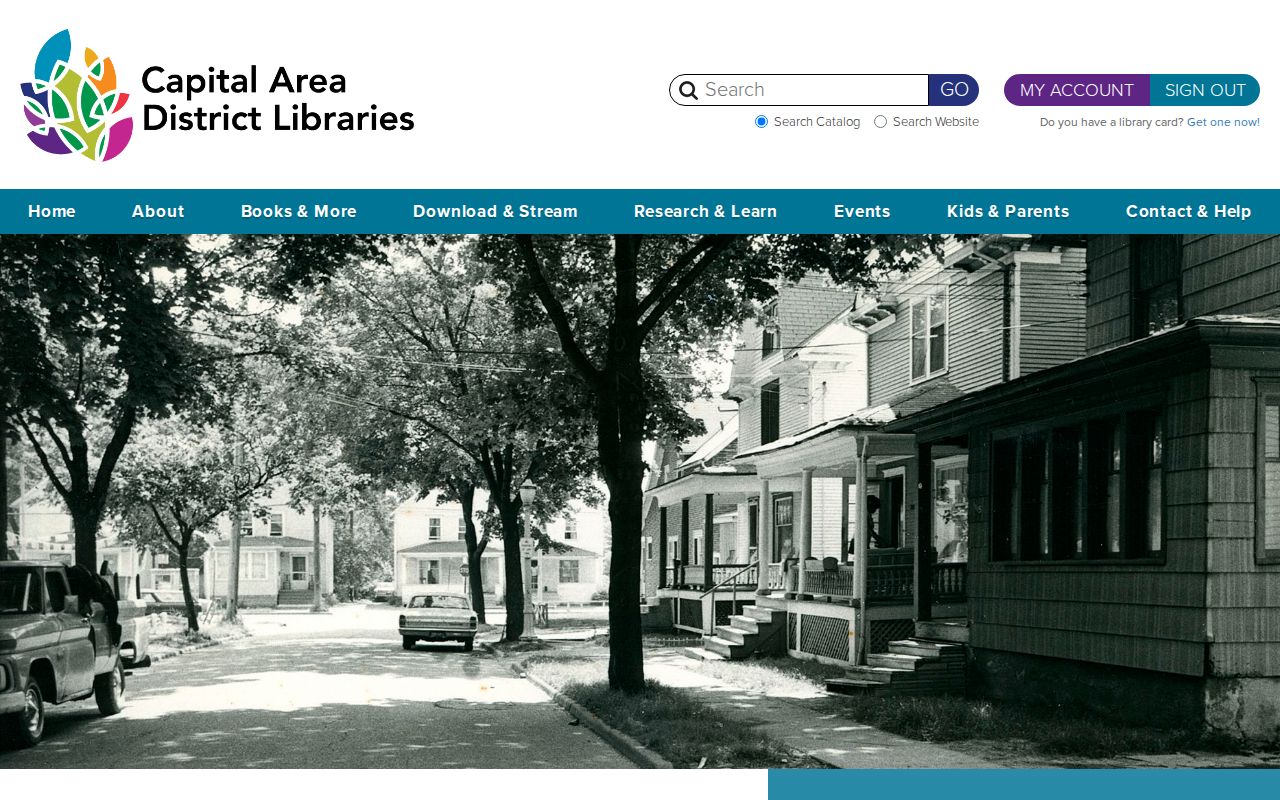
The guide's mix of property files, maps, and directories makes it useful for testing an address history, but each item still needs a date and an independent record connection.
Delta Township Past Households
Ownership is only one layer of past residents. Polk directories may include other household members, ownership information, street lists, phone information for a head of household, and classified listings. Bresser criss-cross volumes are especially helpful because they arrange entries by street address and can show household heads, first-listed occupants, phone entries, and owner-status notation in some editions. Those fields differ by publisher and year.
Build the household layer as a dated flow: printed address and spelling → directory edition and page → Sanborn map or property-file check → assessment or census record → obituary, cemetery, or eligible vital record. The Archives guide identifies federal census series for 1850 to 1880 and Michigan state census series for 1845, 1854, 1864, and 1874. Treat a census as an enumeration from its own date, not a current record.
Delta Center and Delta Hillside Cemeteries provide a local ownership and burial trail through the township clerk. A burial or cemetery owner can supply a family-history lead, but it does not prove that person lived at the address. Pair it with an obituary, directory, deed, or eligible death record.
Delta Township Archives and Mills
The Archives of Michigan county-guide collection points to the Eaton County guide, where assessment rolls run from 1844 to 1955 with selected additional series. Archives records are rarely organized by a person's name, so use county, township, record series, and date together. The guide also identifies historic tax, voter-canvasser, court, cemetery, and census series that can provide a dated lead without becoming a complete residential list.
Delta Mills supplies a local historic context for this work. Delta Township material links early settlement to Erastus S. Ingersoll in 1836 and a water-powered sawmill and gristmill by 1840. Search DTDL for Delta Mills, Ingersoll, school, church, and mill terms before relying on a bare surname. A caption can suggest a local connection, then an assessment roll, census, deed, directory, or vital record must verify the address or person.
Use the Archives of Michigan guide collection to locate the Eaton County record-series description.
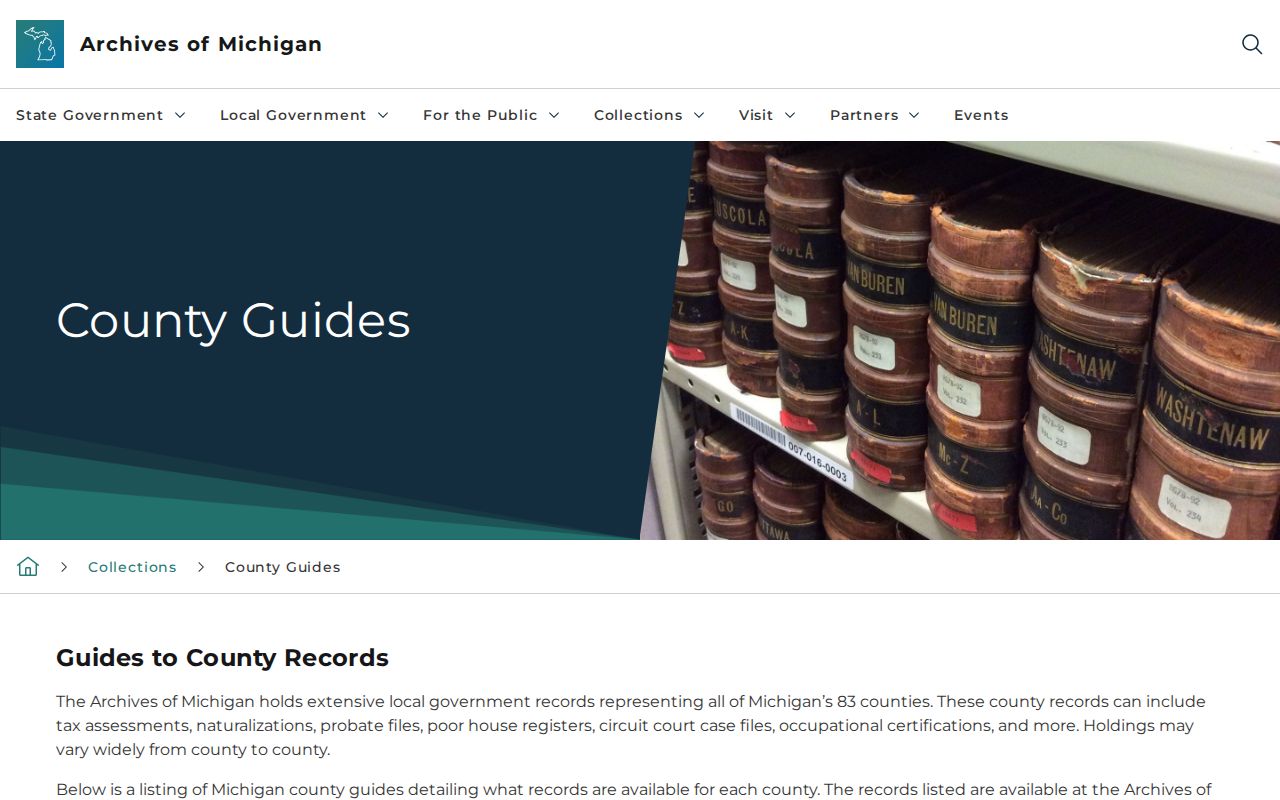
The guide is a finding aid, so a successful previous-residents search still requires matching the right township, record series, and date before interpreting a name.
Delta Township Previous Resident Limits
House history and family history are legitimate reasons to trace previous residents, but the record trail has real boundaries. Delta Township has no complete publicly searchable historical household directory for all streets, no complete public cemetery burial database was located, and historic city-directory coverage varies. A lack of a hit can reflect omission, spelling, coverage, old numbering, a non-indexed record, or a different jurisdiction. It should not be treated as proof that a person never lived there.
Keep only the details needed to test a historical connection. Do not publish living people's personal contact details, full birth dates, or unredacted court or vital materials. Do not use an address-history search to trace or contact a living person, and do not turn a partial record trail into a claim about current occupancy.
Lawful use. Use Delta Township previous-residents records for house history, family history, estate research, or personal curiosity. Stalking, harassment, unwanted contact, threats, or attempts to intimidate another person can violate Michigan law.